https://www.cristie.com/wp-content/uploads/2024/02/Cristie_Azure_Stack_HCI-01.png

Microsoft Azure 스택 HCI로의 시스템 마이그레이션 간소화

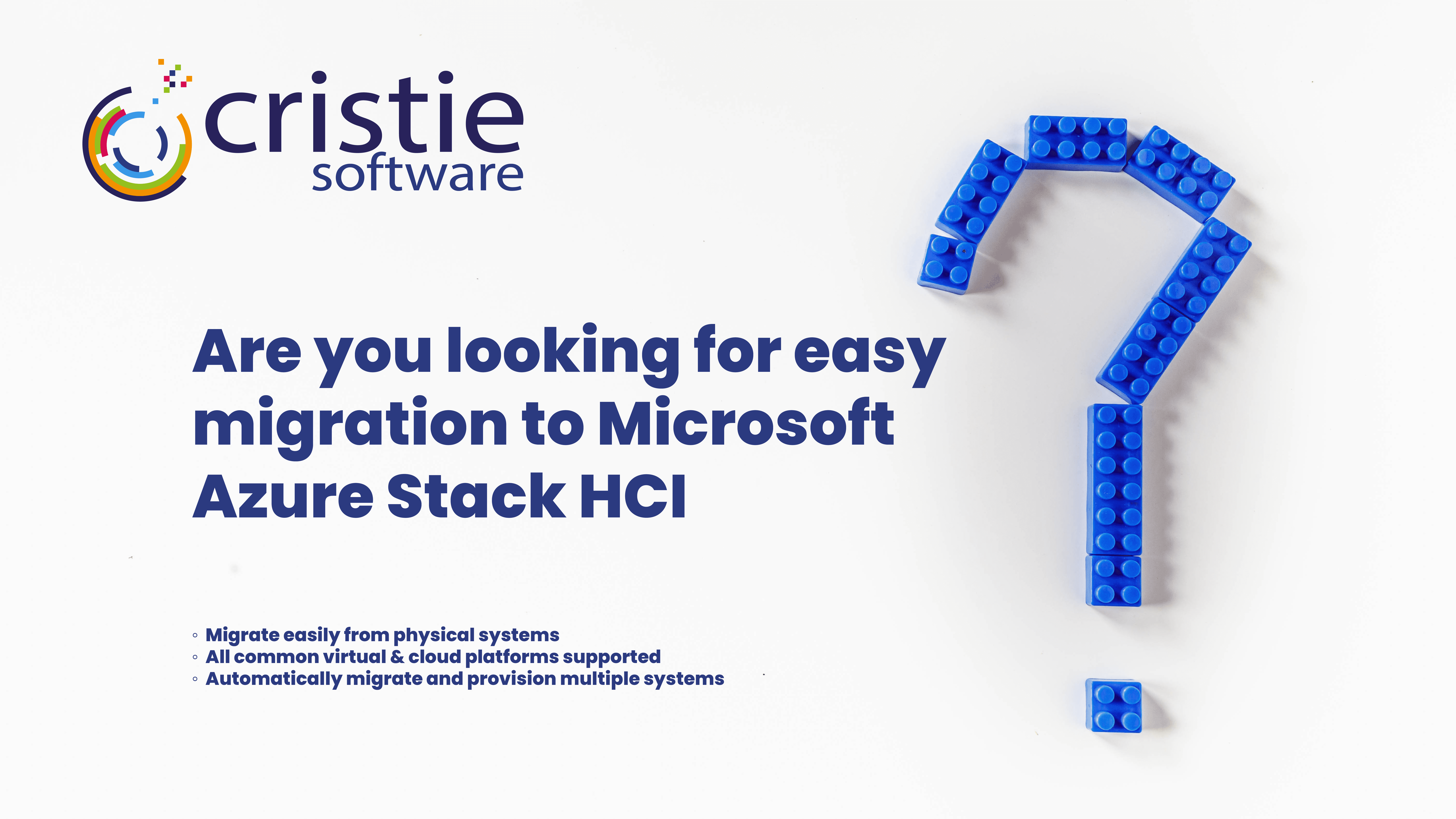
Azure Stack HCI (Hyper-Converged Infrastructure) is a solution offered by Microsoft that brings together Windows Server technologies with Azure services to enable hybrid cloud scenarios. We have noticed an increase in Azure Stack HCI migration projects within our enterprise base, particularly with customers looking to build private HCI and hybrid cloud solutions for reasons such as data sovereignty. The migration of multiple systems to Azure Stack HCI has until now proven to be a difficult and time-consuming task for systems administrators within the IT community due to the lack of automation tools.

Migrate Multiple Systems to Microsoft Azure Stack HCI with the Cristie Virtual Appliance

Cristie Software has solved the challenges of migration through new capabilities within the Cristie Virtual Appliance (VA) that offer seamless integration and automated provisioning when migrating systems to Azure Stack HCI. The Cristie VA can now easily provision multiple systems within Azure Stack HCI from a wide range of source platforms including VMware, Nutanix, Amazon EC2, Oracle Cloud, Hyper-V or directly from physical machines. Systems can be automatically provisioned based on source platform specifications or adjusted within the VA saving many hours of manual configuration.

Factors contributing to the interest and adoption of Azure Stack HCI

To assess the current popularity and adoption trends of Microsoft Azure Stack HCI, we recommend our customers to review recent industry reports, customer case studies, and technology surveys. Additionally, checking Microsoft’s official announcements and user forums can provide insights into the community’s engagement with the platform. Several factors contribute to the interest and adoption of Azure Stack HCI:
Hybrid Cloud Adoption: Azure Stack HCI aligns with the trend of hybrid cloud adoption, allowing organizations to build a consistent infrastructure across on-premises data centers and the Azure cloud. This flexibility is valuable for businesses with specific compliance requirements or data residency concerns.
Seamless Integration with Azure Services: The integration of Azure Stack HCI with Azure services offers a unified platform for managing workloads both on-premises and in the cloud. This integration simplifies operations and enables a seamless hybrid cloud experience.
Scalability and Flexibility: Azure Stack HCI provides scalability and flexibility, allowing organizations to scale resources based on their evolving needs. This adaptability is attractive for businesses with varying workloads and resource requirements.
Hybrid Operations with Azure Management Tools: Azure Stack HCI allows organizations to use Azure management tools for consistent operations across hybrid environments. This facilitates streamlined management and monitoring of resources.
Edge Computing Capabilities: Azure Stack HCI is suitable for edge computing scenarios, making it a relevant solution for organizations deploying applications at the edge for low-latency and offline capabilities.
Integrated Virtualization: Leveraging Hyper-V for virtualization, Azure Stack HCI provides a familiar and robust virtualization platform for running virtual machines.
Security and Compliance: Integration with Azure Security Center and other Azure services enhances security and compliance capabilities, addressing the concerns of organizations with stringent security requirements.
Enhancements and Updates: Microsoft regularly releases updates and enhancements to Azure Stack HCI, introducing new features, improvements, and compatibility with the latest technologies.

In Summary

https://www.cristie.com/wp-content/uploads/2022/09/thub-logo1.png

문의하기

https://www.cristie.com/wp-content/uploads/2022/09/thub-logo1.png

문의해 주셔서 감사합니다. 요청을 받았습니다.

https://www.cristie.com/wp-content/uploads/2019/06/gdpr_130px.png
개인정보 개요

본 웹사이트는 사용자에게 최상의 사용자 경험을 제공하기 위해 쿠키를 사용합니다. 쿠키 정보는 사용자의 브라우저에 저장되며, 사용자가 웹사이트에 다시 방문할 때 사용자를 인식하고 사용자가 가장 흥미롭고 유용한 웹사이트 섹션을 이해하는 데 도움을 주는 등의 기능을 수행합니다.